
30 Sep 2026
Simplicity can be powerful.
Busy hospitality venues can be complex places. There are systems, notifications, choices and information everywhere, all competing for our time and attention.
Which may be why simple moments feel so satisfying. A clear road after a difficult journey. Finding a seat on a crowded train. A process that works the first time. We all recognise their value immediately: friction disappears and, for a moment, life feels lighter. Simple.
That is the attraction of The Power of Simple. We feel the difference when it happens.
And in hospitality, that value can be very practical. For Classeq, it starts before a warewasher is even chosen – making the range easier to understand and specify – and continues through installation, operation, cleaning, connectivity and servicing.
There aren’t many places where giving people a little more clarity and a little less to think about matters more than in hospitality.
Hospitality has no attention to spare.
Behind every enjoyable family meal, well-earned pint after work and seemingly effortless service are countless actions and decisions taken by people.
Deliveries arrive. Food prepped. Orders taken. Tables turned. Glasses, plates and cutlery move constantly between the guest, front of house and the kitchen. Teams communicate, adapt and solve problems as service happens around them. When everything comes together, the guest sees none of the work behind it. They simply enjoy the result.
But delivering that consistently has become increasingly demanding. Costs have risen. Margins are under pressure. Recruitment remains challenging. Teams are often smaller, experience levels vary and customer expectations continue to grow.
Alongside those financial and operational pressures sits another challenge that is harder to measure: the pressure on people’s attention. Booking systems, staff rotas, tills, orders and equipment can each be straightforward once they are set up. The demand comes from keeping all of them moving together, and from the moments when something changes or needs attention. Changed reservations, gaps in the rota, and orders to clarify. At 7pm on a busy Saturday evening, those demands can arrive together. Good systems and technology help by making those moments easier to deal with and the next action clear.
Hospitality businesses run better when people have clarity and confidence to do what needs to be done. When things are that little bit… simpler.
And that is where simplicity creates its value. Not by giving a hospitality business less, but by asking less from the people running it.
Simple is not the absence of thought.
There is a common misconception that simple means basic. That if something is straightforward to understand or easy to use, it must contain less intelligence, less engineering or less capability.
In reality, deliberate simplicity can take more thought, not less. Deciding what genuinely helps people in hospitality requires an understanding of their working environment. Knowing what to include, what to make straightforward and what not to ask the user to think about is a feat of engineering and design.
-What do they need to achieve?
-What might go wrong under pressure?
-What would help a new employee feel confident without limiting what an experienced operator can accomplish?
Answering those questions takes experience, discipline and respect for the person using it. Good engineering deals with complexity on their behalf.
In warewashing, Classeq’s click-in, click-out wash arms are a good example of that principle taking a practical form. The thought has gone into the design, so an everyday cleaning task becomes more straightforward for the person using the machine.
That same principle runs through Classeq. It is why The Power of Simple is more than a marketing message: thoughtful design, engineering, technology and innovation come together so that the end result feels clear and straightforward to the person using it.
What simplicity gives back.
In hospitality, a confusing process rarely affects only one person or one task. Its consequences snowball. It takes longer to explain and creates more opportunities for mistakes. Those mistakes can lead to interruptions, questions and repeated tasks. Those interruptions can affect the rhythm of the kitchen, the pace of front of house and, eventually, the guest experience.
Simplicity can create the opposite effect. A process that is easy to understand helps a new team member become confident more quickly. Clear controls make the correct action easier to repeat.
-For the kitchen porter, simplicity can mean less uncertainty.
-For the head chef, it can mean fewer interruptions.
-For front of house, it can mean having what they need when they need it.
-For the owner-operator, it can mean greater consistency, more efficient use of time and less operational risk.
-For the customer, it can mean a better experience without ever knowing what made it possible.
That is how the impact of simplicity sweeps through a hospitality business, from the individual to the team and through to the guest experience.
Where warewashing fits.
Warewashing is rarely the main event in a hospitality experience. More often than not, the machine sits in the background quietly doing its job.
But when clean glasses, plates or cutlery are not available when they are needed, the impact can travel well beyond the KP area – slowing the kitchen, interrupting front of house and eventually becoming visible to the guest. Warewashing should work dependably in the background, supporting the service rather than demanding attention from it.
And that makes it a natural place for The Power of Simple: equipment that is straightforward to choose, properly equipped for the job, easy to use and look after, and dependable throughout its working life.
Practising what we preach.
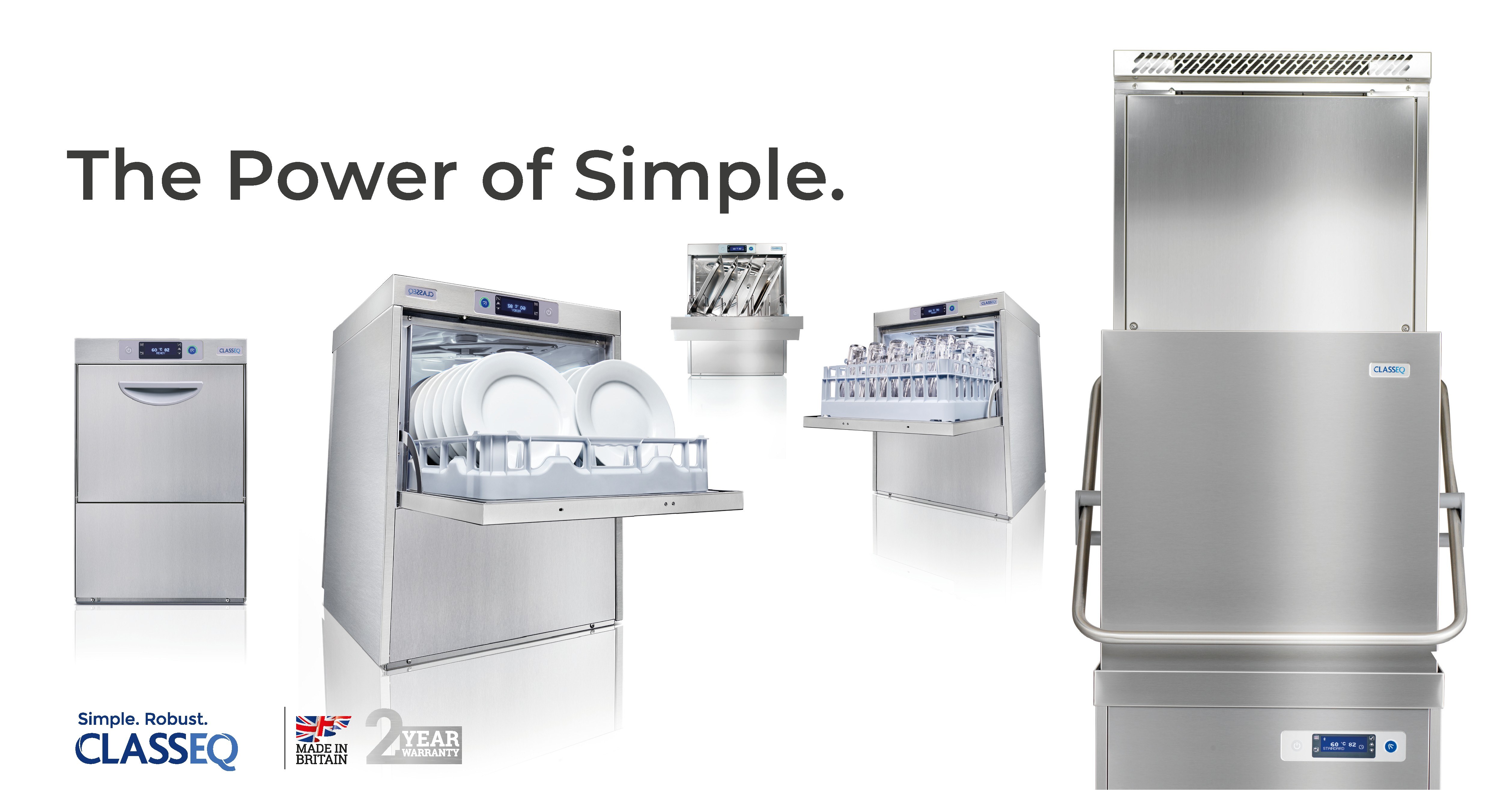
At Classeq, The Power of Simple is woven into the way our range is designed. It begins with the range itself. Clearly defined choices make it easier for a distributor to recommend the appropriate machine and for an operator to understand what they need. One model level, with everything you need included as standard, makes the decision easier without reducing capability.
Because simple does not mean basic. The C400 and C500 Undercounters, for example, can be commissioned as either glasswashers or dishwashers on installation. Across our Undercounter and Pass Through ranges, drain, rinse-booster, detergent and rinse-aid pumps are all included as standard.
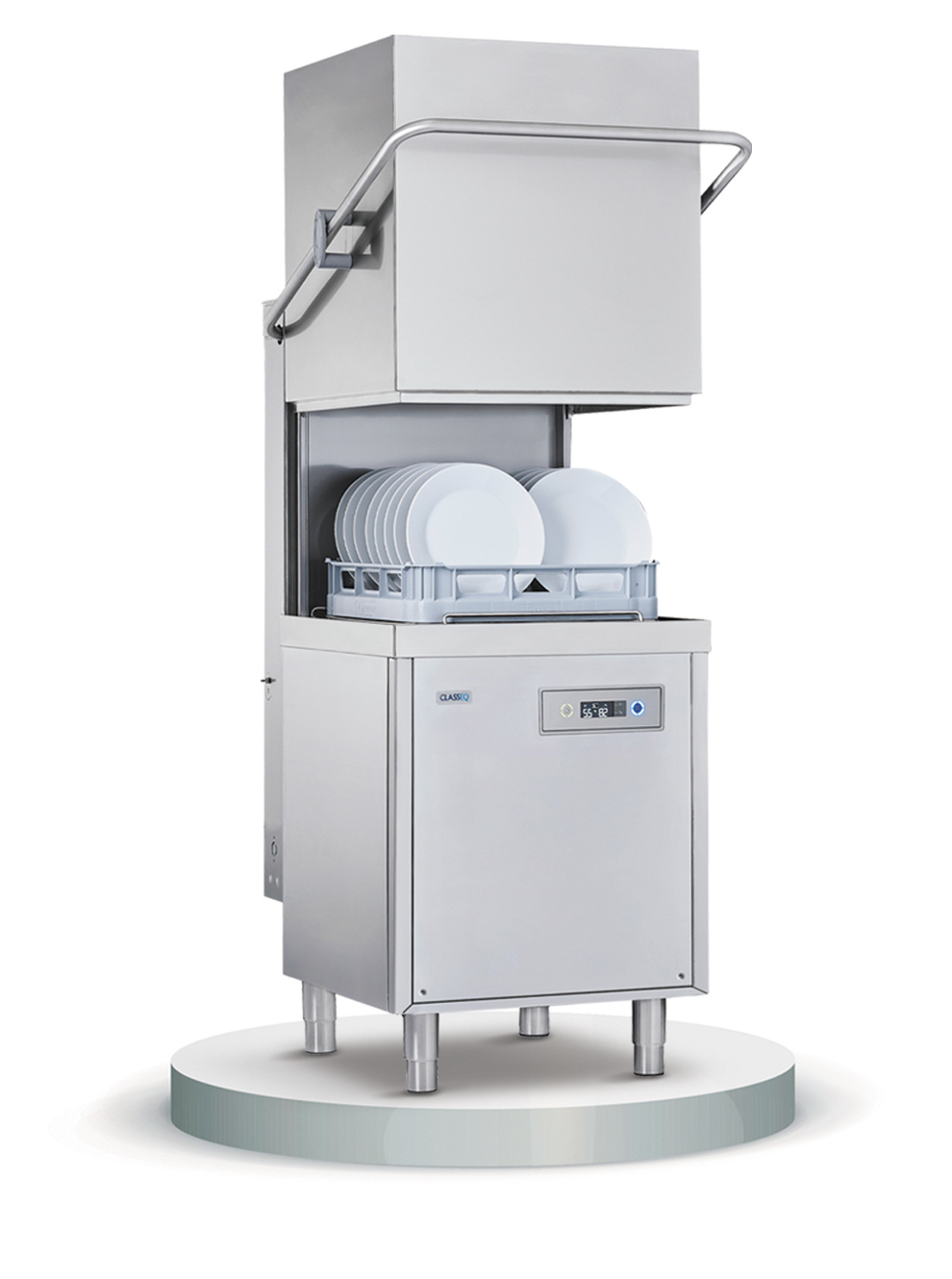
Where a site needs more, additional capability can be added without losing that clarity. Steam recovery on the Pass Through range can create a more comfortable working environment while improving efficiency.
And every Classeq model is Wi-Fi enabled, adding another layer of useful visibility. Alongside that, the Classeq app gives operators and service engineers access to guidance, settings, performance data and service information when they need it.
A clearly defined range makes the selection process easier to understand. Simpler to specify, explain and demonstrate. Put that with familiar controls and common design features across the range and it means that learning about one Classeq machine helps people understand the others.
The intelligence sits in the design and engineering.
Simplicity throughout the journey
The Power of Simple is not only about what goes into the machine. It should be felt as a thread throughout the relationship with Classeq; it is what the person using, selling or supporting the machine experiences.
It starts when a distributor or operator is working out which machine is right for a site, and it’s simpler for them to have the confidence in their decision. It continues through specification and installation, into everyday operation and cleaning, and on through monitoring, maintenance and servicing. At each stage, the principle is the same: make what needs to happen clear, make the next action easy to understand and give people confidence in what happens next. That continuity matters.
A machine that is straightforward to operate but difficult to specify, maintain or support would only solve part of the problem.
The Power of Simple means considering the whole journey – not simply the moment someone presses the wash button.
Taking back attention.
When simplicity is considered from the start, small points of friction can be removed before they ever become part of the working day. Which gives us some useful questions to ask:
-Can the next choice be made clearer?
-Can someone new to the task understand what to do with confidence?
-Can better information or visibility help someone act at the right time?
And that is the practical value of The Power of Simple. Making the things people need to do easier to understand, easier to act on and easier to repeat.
Because every moment of attention saved behind the scenes can be given back to where it creates the greatest value. The guest. The service. The business. And the people who make hospitality happen.
That is The Power of Simple.
30 Sep 2026
9 Apr 2025
17 Jun 2022